

We’ve all experienced the resume black hole: spending hours tailoring your resume, writing a personalized cover letter, filling out endless application forms, and ultimately receiving radio silence or at best, an automated email saying, "Thank you for your interest, but..."
In today’s hyper-competitive job market, applying through traditional job boards is like throwing a message in a bottle into an oceanic storm. However, smart job seekers know there is a golden shortcut to bypass these endless queues: an employee referral.
When a current employee submits your resume through their internal portal, your application lands directly on the hiring manager's desk. But here’s the big question: Is getting a referral equally difficult across all major tech companies?
The short answer is absolutely not. In this data-driven article, we’ve analyzed job market trends, acceptance rates, and candidate experiences to assemble a fun, realistic ranking of how difficult it really is to land a referral at the world's biggest tech companies.
1. Anthropic | The Ultimate Boss Level
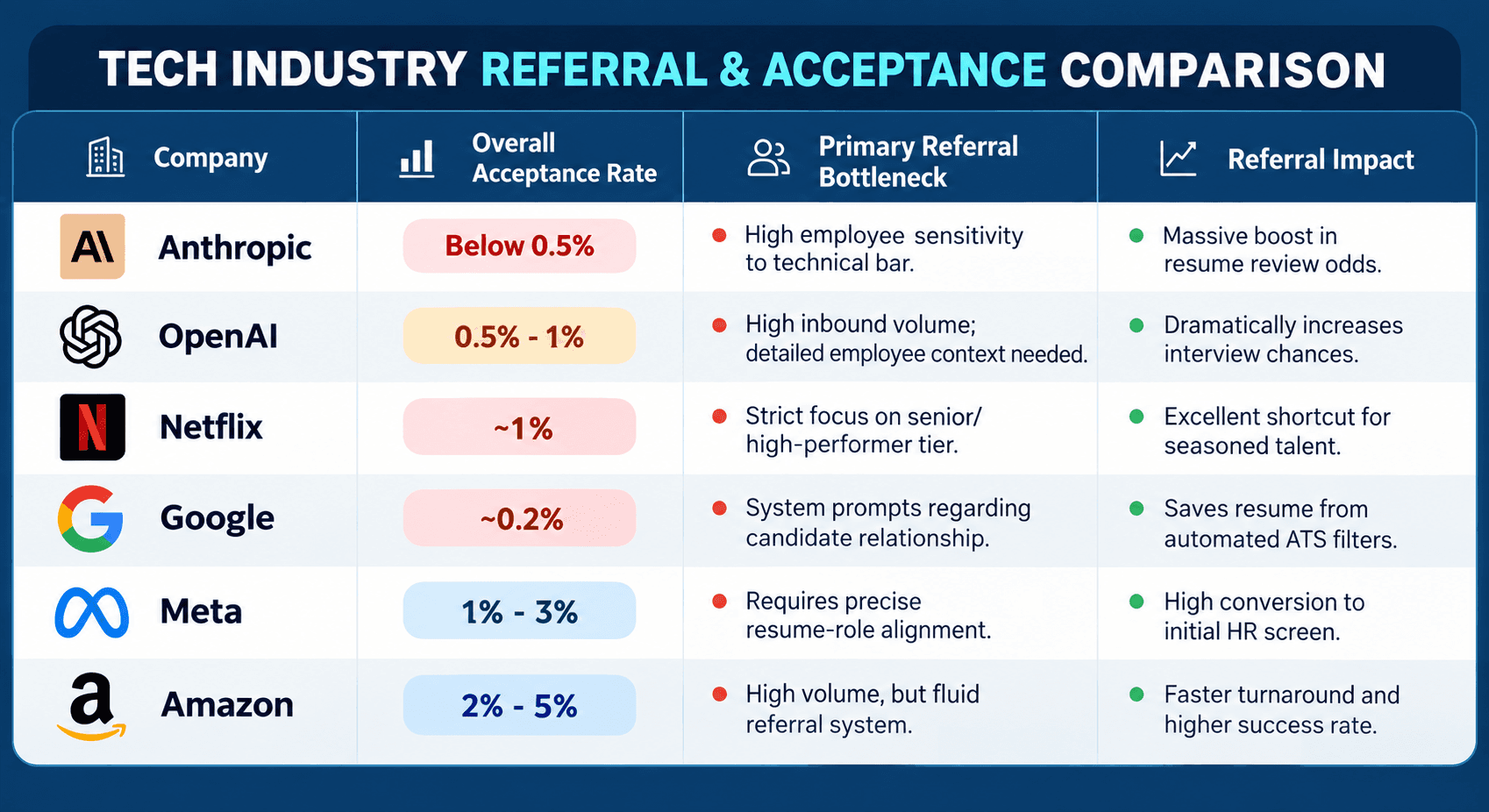
Overall Acceptance Rate: Below 0.5%
Referral Competition: Extremely Fierce
Difficulty Rating: 10/10
If you think breaking into AI companies has gotten easier thanks to the boom, think again! Anthropic is currently one of the hottest destinations for top-tier tech talent. Its overall acceptance rate is lower than that of top Ivy League universities.
Interview feedback on Glassdoor reveals that Anthropic employees are exceptionally protective when referring candidates. In their engineering culture, submitting a referral means putting your personal professional reputation on the line. As a result, employees strictly refer individuals whose technical caliber and work ethic they deeply vouch for.
2. OpenAI | The Impenetrable AI Fortress
Overall Acceptance Rate: ~0.5% - 1%
Referral Competition: Exceptionally High
Difficulty Rating: 9.5/10
Competing for a role at OpenAI is no different than trying out for an Olympic team. Industry reports suggest that having an internal referral increases your resume review odds significantly, but the primary bottleneck is convincing the employees themselves. Due to the massive volume of referral requests employees receive daily, OpenAI’s internal submission system requires staff to provide a detailed evaluation of the candidate. Without prior working context, few employees are willing to take that risk.
3. Netflix | The "Pro Sports Team" Culture
Overall Acceptance Rate: ~1%
Referral Competition: High & Specialized
Difficulty Rating: 9/10
Netflix is renowned for its candid and rigorous corporate culture. Their philosophy is simple: "We are a professional sports team, not a family, and we only hire stars." Netflix primarily focuses on recruiting senior-level talent. Consequently, Netflix employees will only refer candidates if they are fully confident the individual can deliver high-impact value from day one.
4. Google | The Tech Classic with Precise Questionnaires
Overall Acceptance Rate: ~0.2%
Referral Competition: Structured yet Challenging
Difficulty Rating: 8.5/10
As highlighted in an Educative blog analysis, Google maintains one of the lowest acceptance rates in the tech industry despite its massive headcount. The silver lining is that Google features a transparent referral submission process. However, the catch lies in their internal system, which prompts employees with granular questions: "How do you know this candidate? How long have you worked together? What is their primary technical strength?" Mass-messaging strangers on LinkedIn rarely yields a referral here.
5. Meta | Open Doors, Intelligent Screening
Overall Acceptance Rate: ~1% - 3%
Referral Competition: Moderate to High
Difficulty Rating: 8/10
As noted in Pragmatic Engineer's market analysis, Meta remains a major hiring engine where internal referrals heavily influence interview callbacks. Nevertheless, following recent restructuring and a pivot toward organizational efficiency, Meta staff are far more selective, preferring to refer candidates whose skill sets align perfectly with specific open positions.
6. Other Tech Giants (Amazon, Apple, Microsoft)
Overall Acceptance Rate: ~2% - 5%
Referral Competition: Accessible
Difficulty Rating: 7/10
Comparative analysis on TechScreen indicates that companies like Amazon, owing to their vast operational scale and hiring volume, maintain a more streamlined referral pipeline. Referral systems in these organizations are designed with higher employee incentives, making them significantly more approachable compared to emerging frontier AI labs.
How to Multiply Your Referral Odds
At the end of the day, even at formidable companies like Anthropic or OpenAI, a verified referral can completely rewrite your career trajectory. Contrary to popular belief, securing a referral shouldn't depend on having long-lost friends at big tech or spamming cold messages on social media.
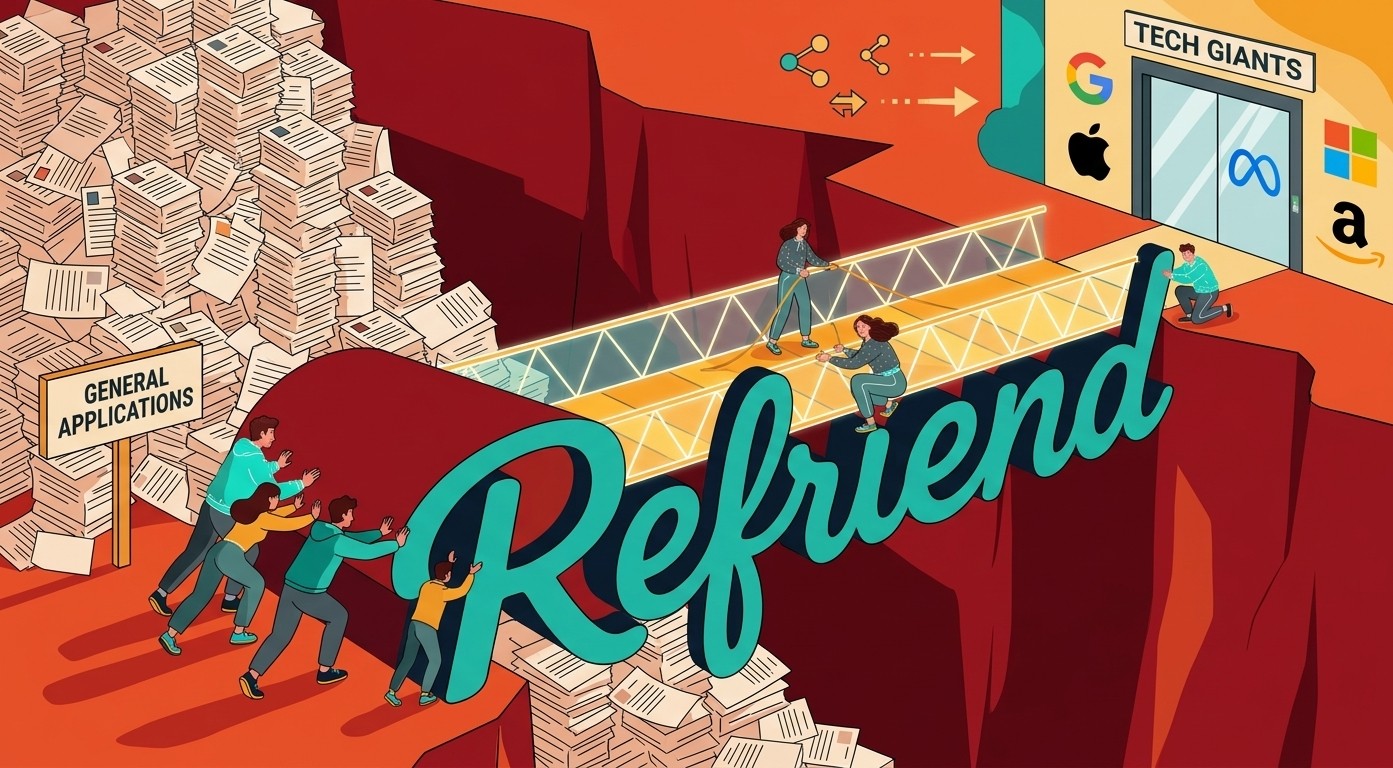
This is where Refriend comes in!
Refriend was created to eliminate these barriers and bring fairness to the hiring ecosystem. We provide a transparent, secure, and direct platform connecting talented professionals directly with verified insiders at top companies.
With Refriend, you can:
Build Direct Connections: Connect directly and professionally with employees working at your target companies.
Get Real Feedback: Receive honest candidate evaluations and feedback before your referral is submitted.
Increase Visibility: Bypass black-hole application portals and land your resume directly in front of hiring managers.
By turning cold applications into warm, verified internal introductions, Refriend bridge the gap between talented candidates and top tech companies. Taking charge of your job search is no longer about leaving your fate to automated algorithms, but about leveraging genuine professional connections that get your foot in the door.