

We’ve all seen the tempting ads:
“Refer a friend and earn thousands in bonuses!”
At first glance, it sounds like a perfect win-win. The company hires someone they can trust, and you get rewarded for making the connection. Simple.
But beneath the surface, things aren’t always that straightforward.
Referral systems can be one of the most effective hiring methods when done right. However, without transparency, they can quickly turn into frustrating and sometimes damaging experiences. Not just for employees, but for their personal relationships as well.
In this article, we take a closer look at the less-discussed side of referrals and whether there’s a smarter way to benefit from them without the downsides.
1. When Companies “Game the System”
To be fair, not all companies operate this way. Many have well-structured and transparent referral programs.
However, based on shared experiences on platforms like Reddit and Glassdoor, there are cases where companies use tactics that delay or completely avoid paying referral bonuses.
Some common patterns include:
• The 90-Day Rule Trap
Many companies require the referred candidate to stay for 3-6 months before the bonus is paid. But there are reported cases where employees are let go just before reaching that milestone.
• The Duplicate Resume Trap
HR claims the candidate already existed in their database perhaps from a previous application or sourcing tool. Even if your referral made the difference, you’re no longer eligible for the bonus.
• Sudden Policy Changes
In some cases, companies reduce the bonus amount at payout stage or convert it into internal credits or non-cash rewards with lower real value.
These situations may not be universal, but they happen often enough to raise concern.
2. The Hidden Cost for the Referrer
The downside isn’t just financial.
When you refer someone, you’re also putting your professional credibility on the line.
According to various reports, a noticeable percentage of employees regret referring someone—not because of the bonus, but because of what followed.
• The “Guarantor Effect”
If the referred person underperforms, it can impact how managers perceive your judgment. In some cases, their mistakes reflect directly on you.
• Strained Personal Relationships
If the job doesn’t match expectations, the tension between your friend and the company can spill over into your relationship.
Phrases like “you said this place was great…” often mark the beginning of that tension.
3. Why Companies Still Rely on Referrals
Despite these challenges, referrals remain one of the most powerful hiring tools and for good reason.
According to data from sources like Zippia:
Hiring through referrals can be up to 40% less expensive than traditional methods
Referred candidates have a 46% first-year retention rate, compared to around 33% for other hires
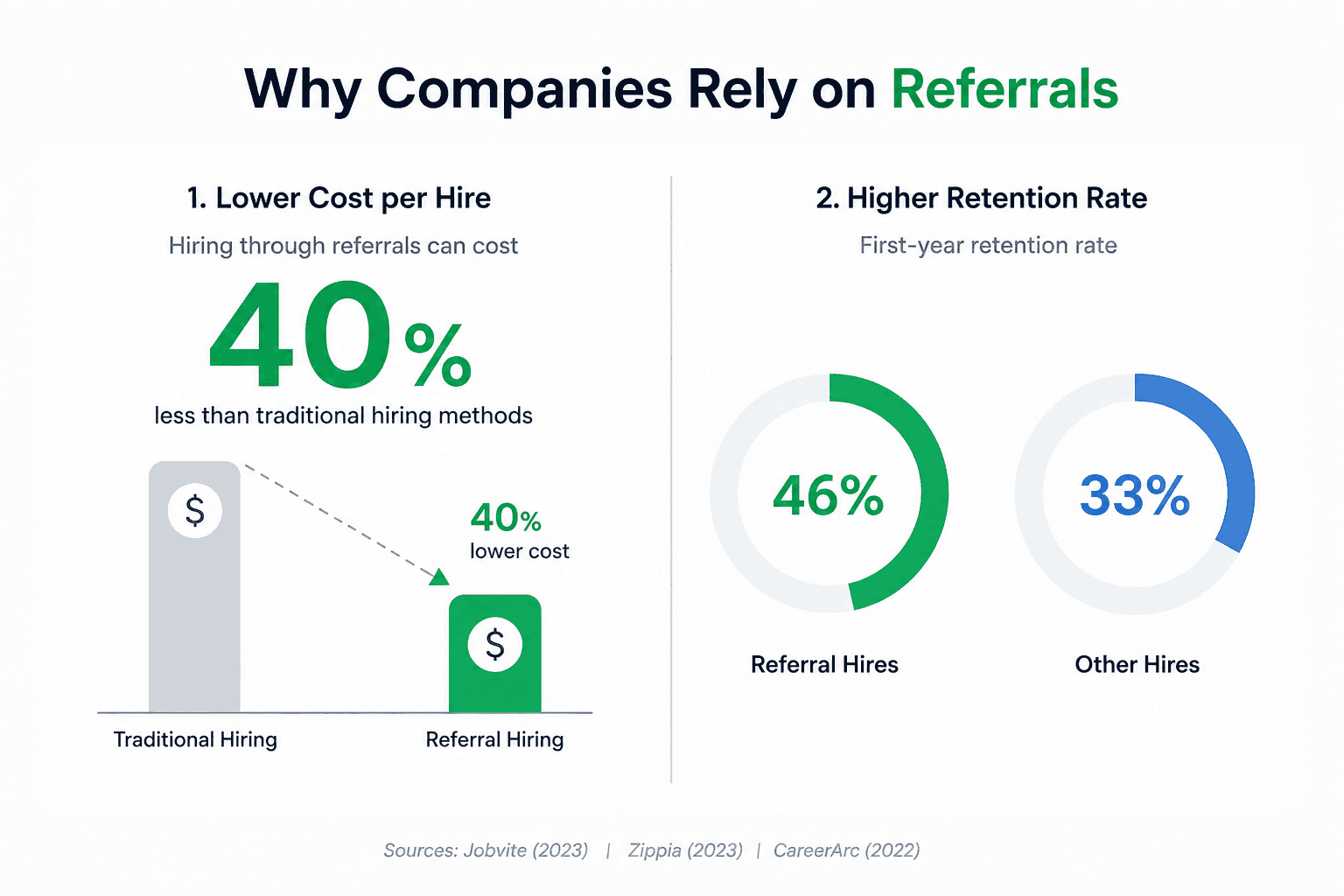
From a company’s perspective, referrals are incredibly efficient.
And that’s exactly why transparency and structure matter even more.
4. Real Stories From the Field
Looking at real experiences makes the picture clearer.
In one case, someone referred a close relative for a senior role. The hire went through but even after two years, the bonus was never paid, with the explanation that it was “lost in the financial system.”
In another situation, a referral led to internal competition, where the referred candidate began undermining the person who referred them to advance their own position.
These might be extreme cases, but they highlight an important truth:
without proper structure, even a good system can lead to unintended consequences.
5. Is There a Better Way?
So the real question becomes:
Is it possible to benefit from referrals without dealing with these uncertainties?ecent years, platforms like Refriend have emerged with that exact goal: making the referral process more transparent and reliable.
In these models:
The referral and application process is more trackable and clear
In recent years, platforms like Refriend have emerged with that exact gIn recent years, platforms like Refriend have emerged with that exact goal: making the
The idea is to create a better balance between what companies need (efficient hiring) and what candidates and referrers expect (trust and clarity).
When done right, referrals can be one of the best ways to land great opportunities and help companies find the right talent.
But without transparency, the same system can turn into a risky experience.
At the end of the day, it’s not just about how you get hired it’s about whether that path is fair, clear, and trustworthy.
And maybe it’s time to ask:more transparent and reliable.
In these models:
The referral and application process is more trackab