The technology industry has long branded itself as the ultimate meritocracy a forward-thinking, progressive ecosystem where talent and innovation trump all else. Yet, behind the sleek glass facades of Silicon Valley and European tech hubs lies one of the industry's most pervasive and poorly kept secrets: systemic ageism.
In almost any other professional sector, reaching the age of 35 to 40 marks the onset of one’s career prime. It is a period validated by seasoned expertise, high-level problem-solving capabilities, and emotional maturity. In the tech world, however, the table turns in a bizarre way. At 35, tech professionals often hit an invisible, structural barrier an "Age Tax." Suddenly, a robust, decade-long resume stops being a golden ticket and starts triggering subtle red flags for hiring teams.
But why does an industry constantly vocalizing a "global talent shortage" actively freeze out its most seasoned professionals? And how does this happen without ever explicitly invoking the classic "Overqualified" label?
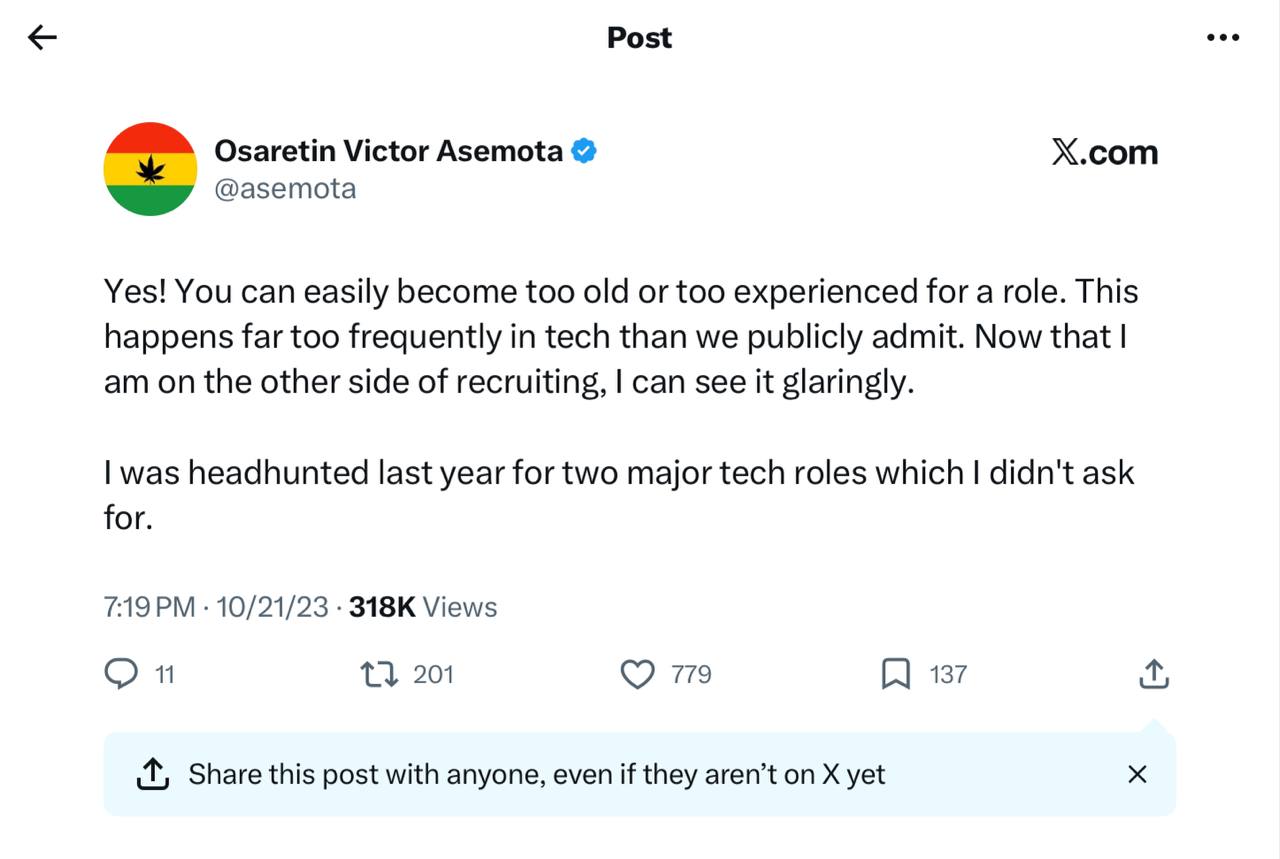
Anatomy of the Age Tax: Why Deep Experience Alarms Hiring Systems
When we look closely at ageism in the modern tech ecosystem, it rarely manifests as an overt rejection during a technical interview. Instead, it operates through deeply ingrained institutional biases and structural gatekeeping that filter out older candidates long before their resumes reach human eyes:
1. The "Uncoachability" Myth
Hiring managers in tech often in their late 20s or early 30s frequently harbor subconscious biases regarding adaptability. There is an unspoken, unfair stereotype that professionals past 35 are rigid in their methodologies, resistant to hyper-fast pivots, and difficult to manage by leadership younger than themselves.
2. The Economic and Cultural Misalignment
Traditional recruitment frameworks operate on predictable, often flawed, demographic assumptions. HR systems frequently assume that a candidate over 35 prioritizes rigid work-life boundaries due to family commitments, meaning they might refuse the late-night sprints or weekend deployments common in early-to-mid-stage startups. Furthermore, companies assume these candidates carry heavy compensation expectations, routinely discarding their profiles even if the candidate is genuinely willing to adjust their salary requirements to pivot into a new sub-sector.
3. Algorithmic Noise and ATS Filtering
Applicant Tracking Systems (ATS) and LinkedIn algorithms are inherently biased toward specific career timelines. When a resume displays graduation dates from the 2000s or early 2010s, or lists legacy tech stacks from early career phases, the algorithm frequently scores the profile lower for "cultural alignment." It is a quiet, automated erasure that happens before an actual hiring manager can evaluate the candidate's real-world strategic value.
The Subtle Distinction: Age Tax vs. Overqualified
It is critical to distinguish the "Age Tax" from being "Overqualified" they are distinct structural hurdles:
Overqualified: This occurs when your explicit skill level significantly outpaces the role’s demands (e.g., a former Data Director applying for an individual contributor Junior Analyst role). The remedy here is usually resume tailoring.
The Age Tax: This happens when your skills perfectly align with the senior or lead role you are targeting, yet the system penalizes you based on proxy indicators of your age. The market isn't rejecting your technical capability; it is rejecting the perceived liabilities of your demographic.
How Refriend Flips the Script for Seasoned Tech Talent
In an ecosystem where cold applications yield diminishing returns for professionals over 35, traditional job boards become a rigged game. Navigating this landscape requires shifting away from volume-based applications toward high-trust, human-centric channels.
This is precisely where Refriend alters the paradigm for experienced tech professionals:
Bypassing the ATS Gatekeepers: Refriend eliminates the algorithmic black hole. Instead of your resume being parsed and discarded by an automated system based on your graduation year, your profile is introduced directly into international tech companies through internal Referrers.
Leveraging Social Proof as a Premium Asset: When an internal employee refers you, your decade of experience is framed as a massive asset an anchor of stability and proven execution for the team rather than a cultural risk. The referral replaces automated bias with immediate professional credibility.
Unlocking the Hidden Tech Market: The most critical, high-impact senior and leadership roles are rarely broadcasted publicly; they are filled quietly through trusted networks. Refriend’s global referral network opens a backdoor to these unadvertised opportunities, placing your experience exactly where it is valued as a premium asset, not a liability.
Rewriting the Rules of the Game
Ageism is a design flaw in the current tech landscape, but it does not have to dictate the trajectory of your career. Sending hundreds of blind resumes into automated portals is a strategy designed for an industry that no longer exists. For tech professionals over 35, the path forward requires a structural pivot.
When traditional hiring pipelines filter you out due to systemic biases, the solution is to bypass the pipeline entirely. By anchoring your job search in internal referrals and human-to-human verification, you reposition your extensive experience as exactly what it is: the ultimate competitive advantage.